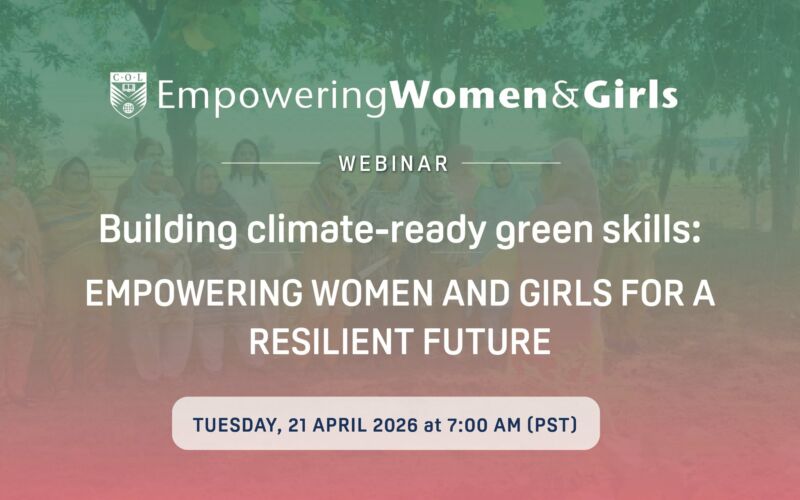
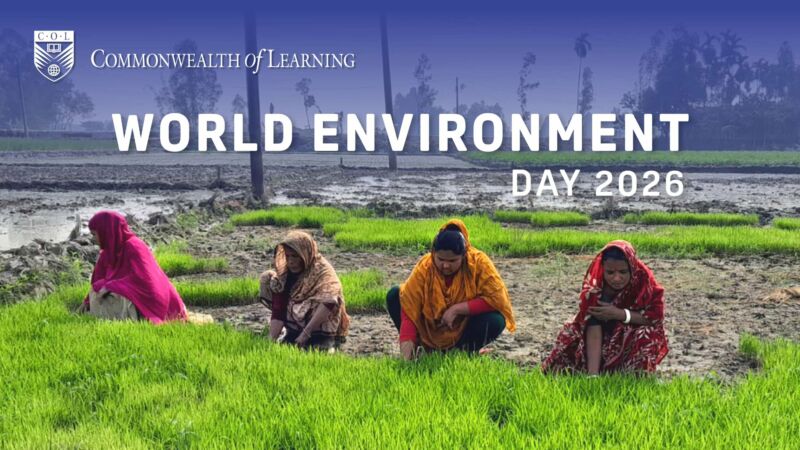
🌍 On World Environment Day, we’re revisiting an important conversation on building climate-ready green skills for women and girls.
COL’s Empowering Women & Girls project recently hosted a webinar on green skills, climate adaptation, and resilience, sharing real-world case studies and training initiatives that help expand economic opportunities and support more inclusive, climate-ready futures.
Watch the recording to explore how green skills can shape more sustainable futures: youtu.be/1ZQ0pdrHb98?si=MhznlQ8BpFHKDZrW
#WorldEnvironmentDay #GreenSkills #ClimateResilience #WomenAndGirls #SkillsDevelopment #ClimateAction COL4D's Empowering Women & Girls Canada’s International Development – Global Affairs Canada
... See MoreSee Less
Women and girls are among those most affected by climate change, yet their voices are too often missing from climate decisions.
This World Environment Day, hear from Frances Ferreira, Senior Adviser: Women and Girls at COL, and our project partners in Pakistan, Sri Lanka, and Mozambique as they share how women and girls are leading climate action in their communities.
Through COL's Empowering Women and Girls (EWG) project, implemented with the generous support of Global Affairs Canada, women and girls are advancing environmental education, disaster preparedness, and climate-smart agriculture to build more resilient futures.
🎥 Watch the video and discover why women and girls must be at the centre of climate action: youtu.be/GOoMxWJAd0c
#WorldEnvironmentDay #ClimateAction #WomenAndGirls #ClimateResilience COL4D's Empowering Women & Girls Canada’s International Development – Global Affairs Canada SPARC Women's Development Centre ADPP Mozambique
... See MoreSee Less
Happy Emancipation Day, Tonga!
With a strong focus on data resilience and open schooling for skills development, Tonga is committed to future-proofing its education system and making learning more accessible, inclusive, and responsive to the needs of all learners.
Since establishing an open university in 2021, Tonga has continued to expand its Open TVET initiatives, equipping young people with skills for employment, entrepreneurship, and leadership; supporting women’s empowerment through skills development and capacity-building; and strengthening community resilience to climate-related challenges.
With support from COL, Tonga National University has strengthened its capacity for Open, Distance and Flexible Learning (ODFL), strengthening internal capacities to advance blended learning, micro-credentials, and the use of Open Educational Resources (OER). The university is also working with regional partners to expand access for women, persons with disabilities, and learners in remote communities.
We celebrate Tonga’s achievements and its leadership in advancing inclusive, resilient, and future-ready learning across the Pacific region.
Ministry of Education and Training Tonga Montfort Technical Institute-Tonga Tonga National University - 'Univesiti Fakafonua 'a Tonga Tonga Women in ICT - TWICT The University of the South Pacific - Tonga Campus
... See MoreSee Less