
VUSSC Voices #11: Professionalising youth work through micro-credentials
VUSSC Voices, a webinar series highlighting expert voices from COL’s Virtual University…
The Commonwealth of Learning empowers people through learning that leads to economic growth, social inclusion and environmental conservation.
VUSSC Voices, a webinar series highlighting expert voices from COL’s Virtual University…

Whether you are a practitioner, advocate, community partner, or simply passionate about advancing opportunities for women and girls, this session will offer valuable perspectives and practical takeaways for more inclusive and impactful programming.
📅 Tuesday, 16 June, 7:30 AM PDT
🔗 Learn more and register: www.col.org/news/webinar-insights-from-the-empowering-women-and-girls-project-journey/
#WomenEmpowerment #GenderEquality #SkillsDevelopment #InclusiveEducation #LifelongLearning COL4D's Empowering Women & Girls Canada’s International Development – Global Affairs Canada📢 Join Us for a Special Webinar: Insights from the EWG Project Journey
Over the past three years, the Empowering Women and Girls Project has supported women and girls across five countries through vocational and life skills training, helping create pathways to employment and entrepreneurship.
Join us as we reflect on key achievements, lessons learned, and the impact of our work, while sharing insights on gender equality, inclusion, environmental sustainability, and innovative approaches that can inform future programming.
📅 Tuesday, June 16, 7:30 AM PST
🔗 Register here: us06web.zoom.us/webinar/register/WN_03RHAYD6R_GK1VnQn9ZoCA
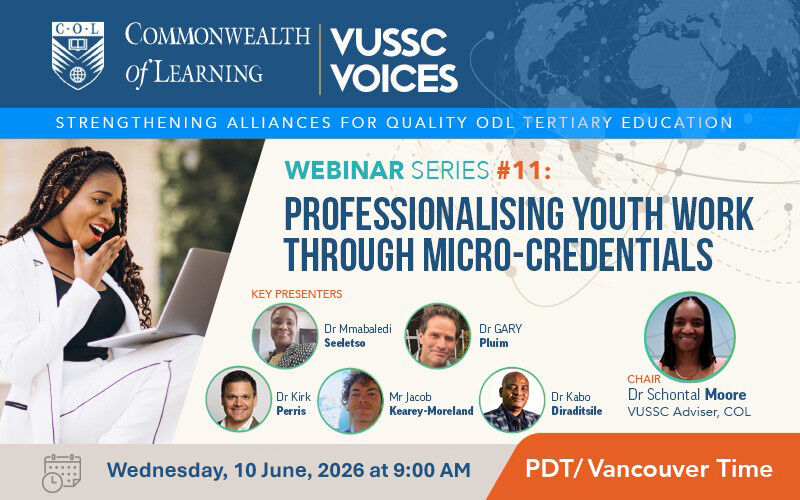
VUSSC Voices returns this week with a webinar on professionalising youth work through micro-credentials.
Chaired by Dr Schontal Moore, Adviser: VUSSC, COL, the session will feature a presentation by a collaborative team from Botswana Open University and Lakehead University on “Micro-credentials, youth work, and professional identity: Lessons from Botswana.”
Learn more and register now: www.col.org/news/vussc-voices-11-professionalising-youth-work-through-micro-credentials/
#VUSSCVoices #MicroCredentials #YouthWork #OpenLearning Virtual University for Small States of the Commonwealth (VUSSC) Botswana Open University - BOU Lakehead University

VUSSC Voices #11: Professionalising youth work through micro-credentials - Commonwealth of Learning
www.col.org
Reading Time: 2 min readVUSSC Voices, a webinar series highlighting expert voices from COL’s Virtual University for Small States of the Commonwealth (VUSSC) network, returns with its eleventh webina...
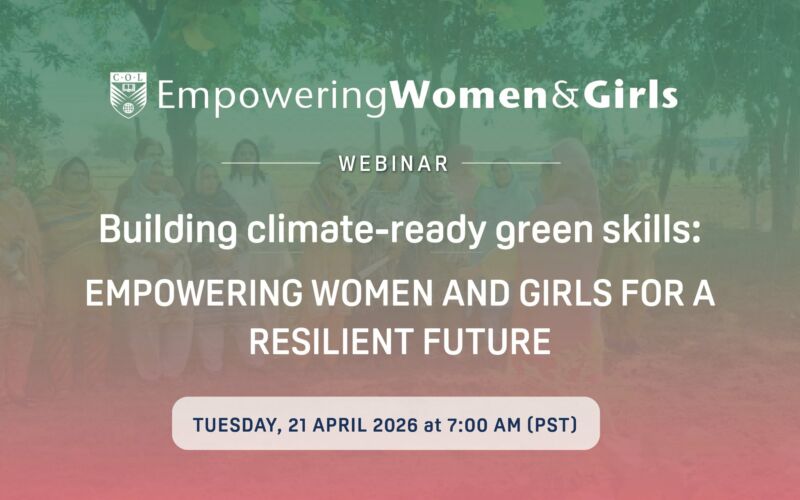
🌍 On World Environment Day, we’re revisiting an important conversation on building climate-ready green skills for women and girls.
COL’s Empowering Women & Girls project recently hosted a webinar on green skills, climate adaptation, and resilience, sharing real-world case studies and training initiatives that help expand economic opportunities and support more inclusive, climate-ready futures.
Watch the recording to explore how green skills can shape more sustainable futures: youtu.be/1ZQ0pdrHb98?si=MhznlQ8BpFHKDZrW
#WorldEnvironmentDay #GreenSkills #ClimateResilience #WomenAndGirls #SkillsDevelopment #ClimateAction COL4D's Empowering Women & Girls Canada’s International Development – Global Affairs Canada
Whether you are a practitioner, advocate, community partner, or simply passionate about advancing opportunities for women and girls, this session will offer valuable perspectives and practical takeaways for more inclusive and impactful programming. Learn more and register:

📢 Join Us for a Special Webinar: Insights from the EWG Project Journey
📅 Tuesday, June 16, 7:30 AM PST
🔗 Register here: https://buff.ly/2ParIHJ
VUSSC Voices returns this week with a webinar on professionalising youth work through micro-credentials. Chaired by Dr Schontal Moore, Adviser: VUSSC, COL, the session will feature a presentation by a collaborative team from Botswana Open University and Lakehead University on
🌍 On World Environment Day, we’re revisiting an important conversation on building climate-ready green skills for women and girls.
COL’s Empowering Women & Girls project recently hosted a webinar on green skills, climate adaptation, and resilience, sharing real-world case
World Environment Day 2026
AI Literacy for Teacher Education
Best Practices for AI-Enabled OER in Nigerian Higher Education Institutions

© 2026 Commonwealth of Learning. Content on this website is licensed under the Creative Commons Attribution-ShareAlike International license, with some exceptions as indicated.